
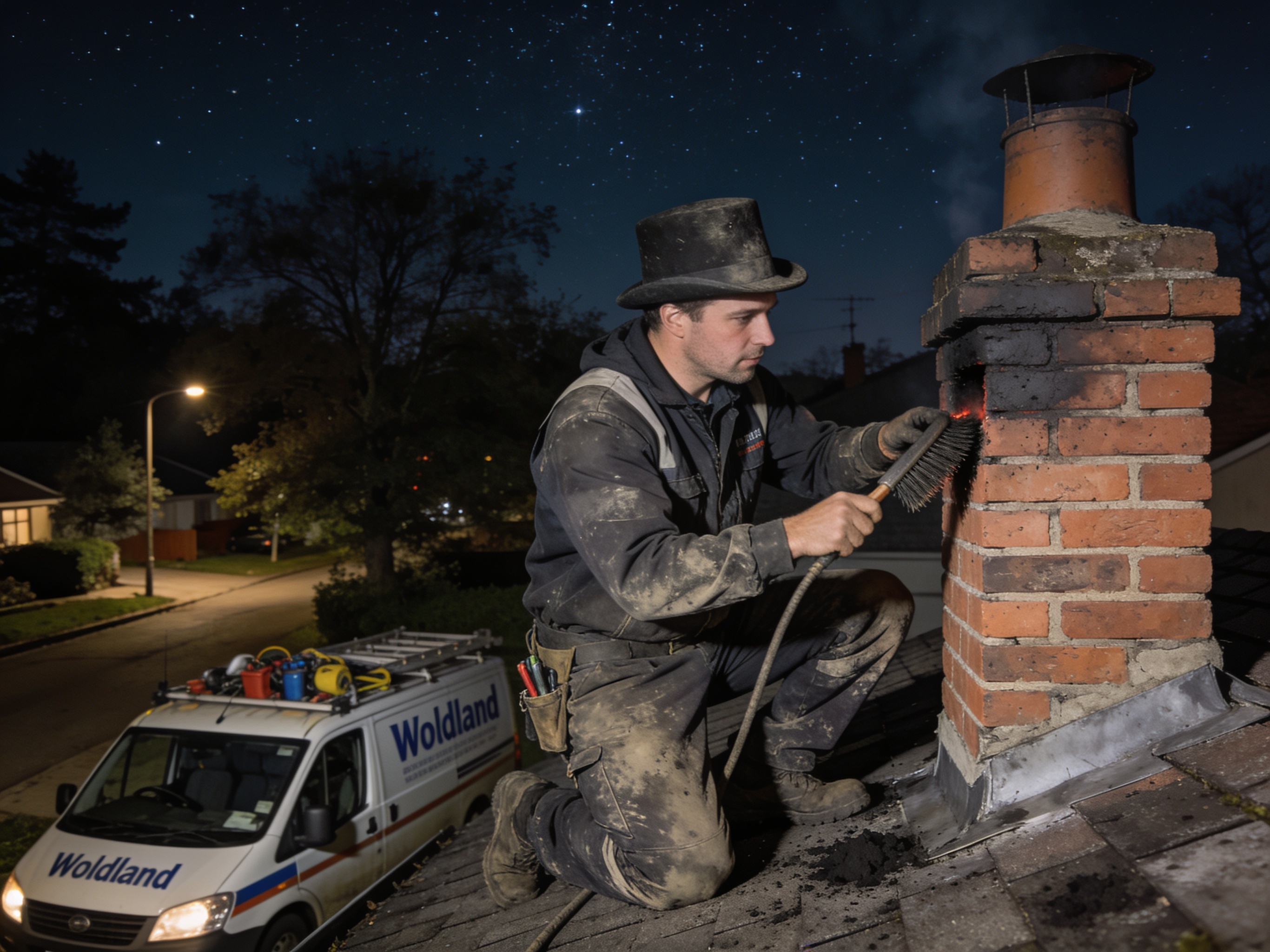
Woodland homes near the Lewis River and in Downtown Woodland often date back decades and feature masonry chimneys that trap moisture during the area's mild wet winters. This humidity mixes with wood smoke to form sticky creosote faster than in drier regions like Kelso or Longview. A 24/7 chimney sweep must arrive ready to handle both the buildup and the risk of chimney fires when residents run stoves through long rainy spells. Owner-operated crews at 1555 Down River Dr know which older flues have narrow liners that require smaller brushes and extra passes to clear without damage.
Dry summers in Cowlitz County leave chimneys full of fine ash that turns to sludge once the rains return. Homeowners along the river corridor see accelerated corrosion on metal caps and dampers because of constant fog and dew. A true 24/7 response includes checking for water intrusion points that only appear after dark or during storms, then sealing them before the next wet front arrives. Skipping this step leads to rapid deterioration in the humid microclimate between Hulda Klager Lilac Gardens and the river.
Emergency calls often come from properties where a blocked flue has already sent smoke into living spaces. Crews carry both standard and rotary tools because many Woodland chimneys have offsets that straight brushes miss. The 24/7 schedule matters most between October and March when families cannot wait for business hours to restore safe draft.
Local terrain near the Lewis River creates pockets of higher humidity that keep creosote soft and more flammable. Technicians adjust cleaning methods accordingly rather than using the same schedule used in higher, drier parts of the county.
Technician insight
In Woodland, the thing that catches most people out with 24/7 chimney sweep is how quickly the Lewis River humidity turns light ash into thick, tar-like creosote during the first few weeks of steady rain. Homes in Downtown Woodland built before the 1980s often have offsets that standard brushes miss, so we always bring rotary equipment on wet-season calls.
Blocked Flue After Heavy Rain
A homeowner in Downtown Woodland called after smoke filled the living room during a December storm. We found the flue packed with soft creosote from weeks of wet-weather burning. Rotary cleaning cleared the offset sections and restored draft before the next front moved in.
24/7 Chimney Sweep Services We Offer
✓Emergency Chimney Cleaning
Immediate removal of creosote and debris when smoke backs up or draft fails during wet winter nights.
✓After Hours Flue Inspection
Thorough camera inspection of liners and caps on the same night a problem is reported.
✓Nighttime Creosote Removal
Rotary and brush cleaning that targets the soft, humid creosote common along the Lewis River corridor.
✓24 Hour Damper Repair
Same-night replacement or adjustment of dampers that stick from repeated moisture exposure.
✓Weekend Chimney Sweep
Full sweep and safety check for homes that only have availability on Saturdays or Sundays.
24/7 Chimney Sweep Cost in Woodland, WA
| Service | Typical Range | What Affects It |
|---|---|---|
| Standard 24/7 Sweep | $250–$400 | Single flue, moderate creosote from wet winter use |
| Emergency Night Call | $350–$550 | After midnight or storm-related blockage |
| Camera Inspection Add-On | $75–$125 | Required on older masonry chimneys common in Cowlitz County |
| Damper Adjustment | $150–$250 | When moisture causes sticking during humid periods |
Ranges are typical for Woodland, WA and confirmed with an exact written quote before any work starts.
How it works
- 1
Answer The Call
Dispatch takes the details and confirms the address in Downtown Woodland or nearby river neighborhoods.
- 2
Travel To Site
Technician loads the correct brushes and camera then heads out from the Down River Dr base.
- 3
Assess And Clear
Open the flue, remove buildup, and inspect for cracks or water damage caused by local humidity.
- 4
Report Findings
Provide a written summary of condition and any recommended follow-up before leaving the property.
Pricing
Prices vary by chimney height, creosote thickness, and time of call; ranges below reflect typical Woodland jobs.